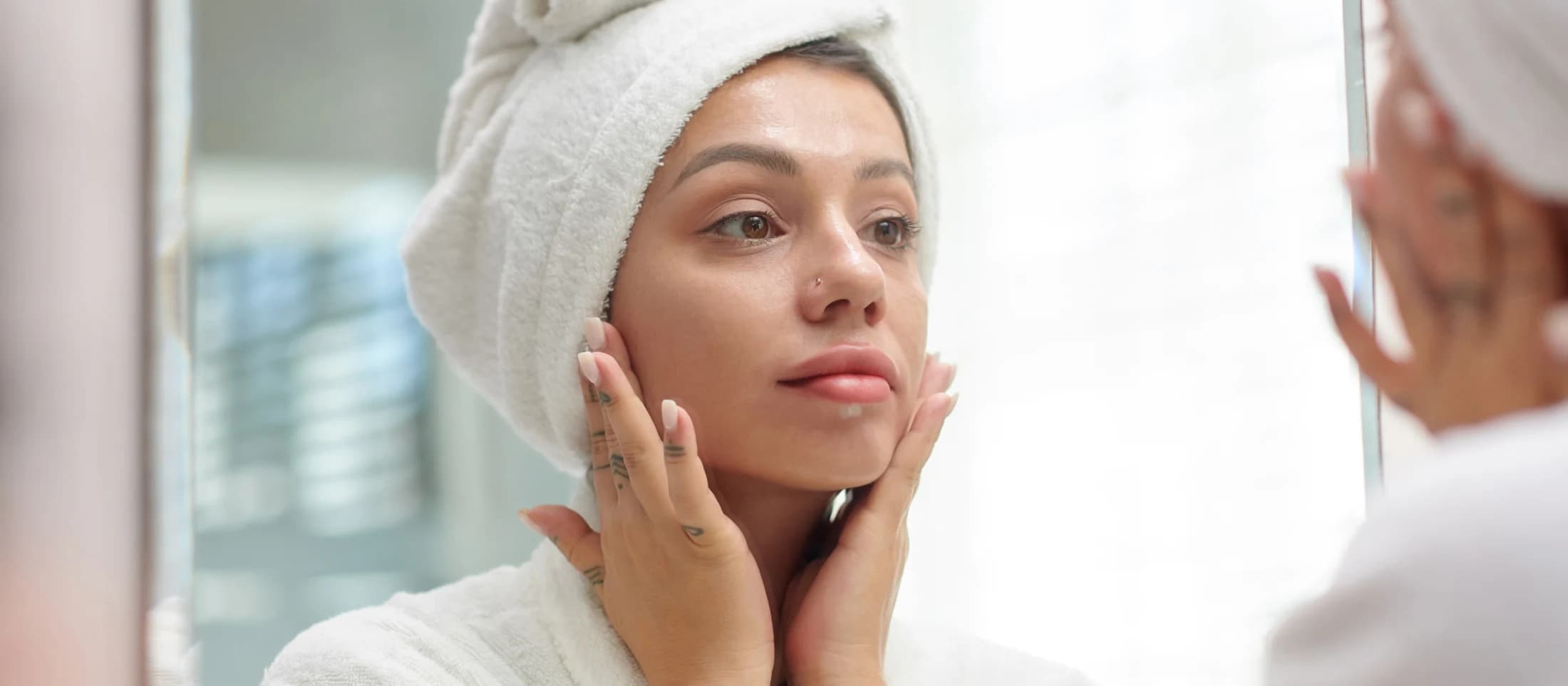
Your skincare routine is working against your lashes. Not all of it -- just one product. And it's probably one you use every night without thinking about it.
Eye cream.
Here is what happens, and why it matters.
The adhesive does its job. Oil undoes it.
Lash extension adhesive is cyanoacrylate-based. When it cures, it forms a rigid, cross-linked bond between the extension and your natural lash. That bond is strong. Under normal conditions, an extension stays attached until the natural lash sheds on its own -- four to eight weeks, depending on your lash cycle.
Oil changes that.
Oils penetrate the cured adhesive and break down the polymer chains that give the bond its strength. The adhesive does not fail all at once. It softens gradually, becomes pliable, and loses its grip. The extension slips before the natural lash is ready to shed. You end up with gaps, uneven retention, and a fill appointment that costs more than it should.
Eye cream is almost entirely oil-based. That is what makes it effective for the skin. It is also exactly what makes it destructive for your bonds.
The specific ingredients to watch for
Oil is not always listed as "oil" on a label. These ingredients behave the same way and are just as damaging:
- Mineral oil
- Petrolatum (petroleum jelly)
- Paraffin wax
- Lanolin
- Vegetable oil, coconut oil, argan oil, jojoba oil
- Shea butter
- Squalane
If any of these appear in your eye cream, night cream, or facial moisturizer, keep the product away from your lash line. That includes product that migrates during sleep. If you apply something oily to your face at night and sleep face-down or on your side, it will reach your lashes.
The contact zone is larger than you think
Most people assume the risk is limited to direct application. It is not.
Anything applied to the upper cheekbone or lower orbital area can migrate upward. Heavy creams applied to the full face can travel during sleep. Even facial oils used further down the face can be transferred via hands, pillowcases, or pressing your face against surfaces.
The safest habit: apply all creams and oils to your face first, let them absorb for several minutes, then do any eye-area product. Stop at the orbital bone. Do not bring product within half an inch of the lash line.
What you can use instead
If dry undereye skin is the issue, you have options that will not compromise your bonds.
Water-based eye gels work well. They use humectants -- hyaluronic acid, aloe, glycerin -- to draw moisture into the skin without introducing oils. Look for formulas labeled "oil-free" and confirm by checking the ingredient list, not just the marketing.
For puffiness, cooling tools (chilled jade rollers, eye masks kept in the refrigerator) address the problem without any product contact at all.
For fine lines, retinol eye treatments exist in oil-free formulations, though these are less common. If the product requires a thick carrier to work, it is probably not compatible with extensions.
When in doubt, ask at your appointment. It is a faster answer than reading ingredient labels for twenty minutes.
The one question worth asking at your next fill
If you are consistently losing extensions before your fill is due, product contact is the first thing to investigate. Lash extension adhesive does not fail randomly. Premature loss almost always has a cause: sleeping on your lashes, getting them wet too early, or oil contact.
Identifying which one is happening saves you money and gets you to better retention faster.